
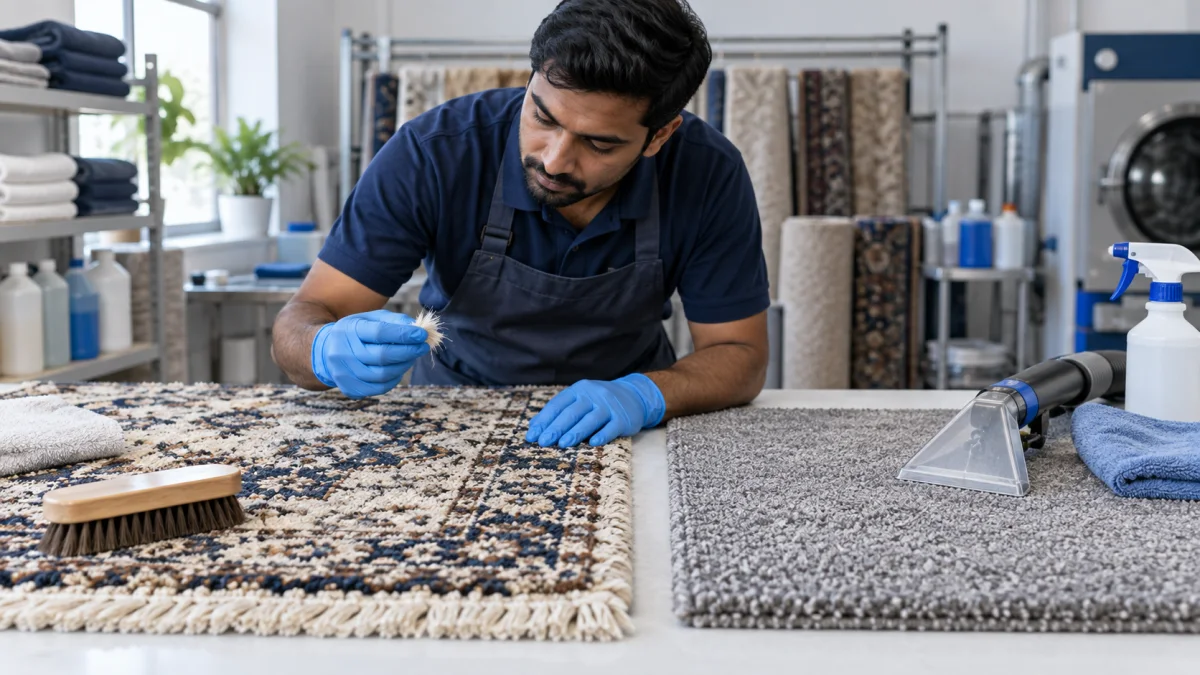
Woollen carpets generally need gentler chemistry, lower agitation and careful moisture control, while many synthetic carpets tolerate a wider range of water-based methods. Fibre type is only the starting point: dye stability, backing, construction, age and previous treatments can make two similar-looking carpets behave differently.
Never choose a cleaning product by colour or softness alone. Confirm the label or fibre information, test discreetly, and treat the carpet as a complete system rather than surface yarn.
Why wool needs a cautious process
Wool can absorb moisture, change texture with aggressive movement and lose dye under unsuitable chemistry. High alkalinity, heat and prolonged wetting may create shrinkage, browning, colour movement or a harsh feel. Natural variation is normal, so cleaning should preserve the fibre rather than trying to make it look unnaturally uniform.
Blot spills quickly with a clean white cloth and avoid rubbing the pile. Do not use bleach or a strong general-purpose cleaner. The main textile-care guide explains label and stain checks; carpet cleaning adds backing and floor protection that clothing does not have.
How synthetic fibres behave differently
Nylon, polyester and polypropylene have different stain affinities and heat limits, even though all are synthetic. Some repel water-based spills but hold oily soil. Others may show crushing, melting or colour change if heat and chemistry are excessive. A synthetic label does not authorize every product or machine.
Test colour and texture in a hidden corner, then use the least aggressive effective method. Remove dry soil before adding moisture, because wetting loose dust can create mud deeper in the pile. Avoid overusing detergent; sticky residue attracts new soil and makes the carpet appear dirty again sooner.
Backing and construction affect the result
Hand-knotted rugs, tufted carpets, woven pieces and fitted carpet have different backing and edge details. Adhesive, latex, jute, fringe and underlay may respond poorly to saturation. A colourfast face yarn does not guarantee a stable backing. Check weak edges and repairs before moving or cleaning the item.
Professional inspection should identify fibre and construction as far as practical, test dye stability and discuss existing wear. Our carpet cleaning service in Karachi selects a method after checking those factors rather than classifying every carpet only as light or dark.
Stain treatment is fibre-specific
Tea, oil, ink, food and tracked soil need different approaches. Remove solids without spreading them and blot liquid from the outside inward. Do not flood a spot or scrub across the pile. Tell the cleaner what caused it and which product was used; a hidden household residue can react during later treatment.
Old stains may have altered dye or fibre permanently. Sun fading, abrasion and pile wear can resemble incomplete cleaning but will not wash away. A careful cleaner should distinguish soil from damage and avoid repeated strong treatment when the material has reached its safe limit.
For a home spot response, place absorbent white material at the edge of the spill and change it as colour or liquid transfers. Keep the treated boundary small and avoid pouring solution from a bottle. A ring often forms when a spot is over-wet or detergent is not removed evenly. If the carpet has several marks, isolated home treatment may create a patchy appearance.
Move only furniture that can be lifted safely and note any metal feet or wood stain that could transfer during drying. Do not drag a heavy piece across the pile. Where a fitted carpet meets woodwork or another floor, protect the boundary from moisture and cleaner. These construction details are as important as selecting chemistry for the fibre.
After drying, reset the pile gently with the suitable tool and direction. Vacuum only when the carpet is ready, using a height and brush setting that will not catch fringe or pull weakened yarn.
Drying and maintenance matter in Karachi
Use airflow and controlled moisture so the pile, backing and floor beneath dry fully. Do not replace heavy furniture on a damp carpet, and avoid walking on it until the fibres are dry and settled. Humid and monsoon conditions can extend the drying window; surface dryness is not proof that the backing is ready.
Vacuum routinely with a setting suitable for the pile and fringe. Use entrance mats to reduce tracked grit, rotate movable rugs to balance wear and respond to spills promptly. Upholstery should not receive leftover carpet chemical; see how often to clean a sofa. For other mixed-material items, the shoe and sneaker cleaning guide explains why one wash method cannot suit every construction.
Frequently asked questions
Can the same cleaner be used on wool and synthetic carpet?
Do not assume so. Wool, nylon, polyester and polypropylene have different chemistry, moisture and heat limits, and the backing must also be considered.
Why should dry soil be removed first?
Vacuuming suitable loose soil before wet treatment prevents dust from becoming muddy and moving deeper into the pile.
Can carpet wear be cleaned away?
No. Abrasion, crushed pile, fading and fibre damage may remain after soil is removed. Cleaning cannot rebuild damaged material.
When can furniture go back after cleaning?
Only after the pile and backing are completely dry. Returning furniture early can mark fibres, transfer colour or slow drying.
For a woollen, synthetic or mixed-construction carpet, request an assessment through our professional carpet cleaning service in Karachi. Identify stains, repairs and any previous product so the team can set realistic treatment limits.


