
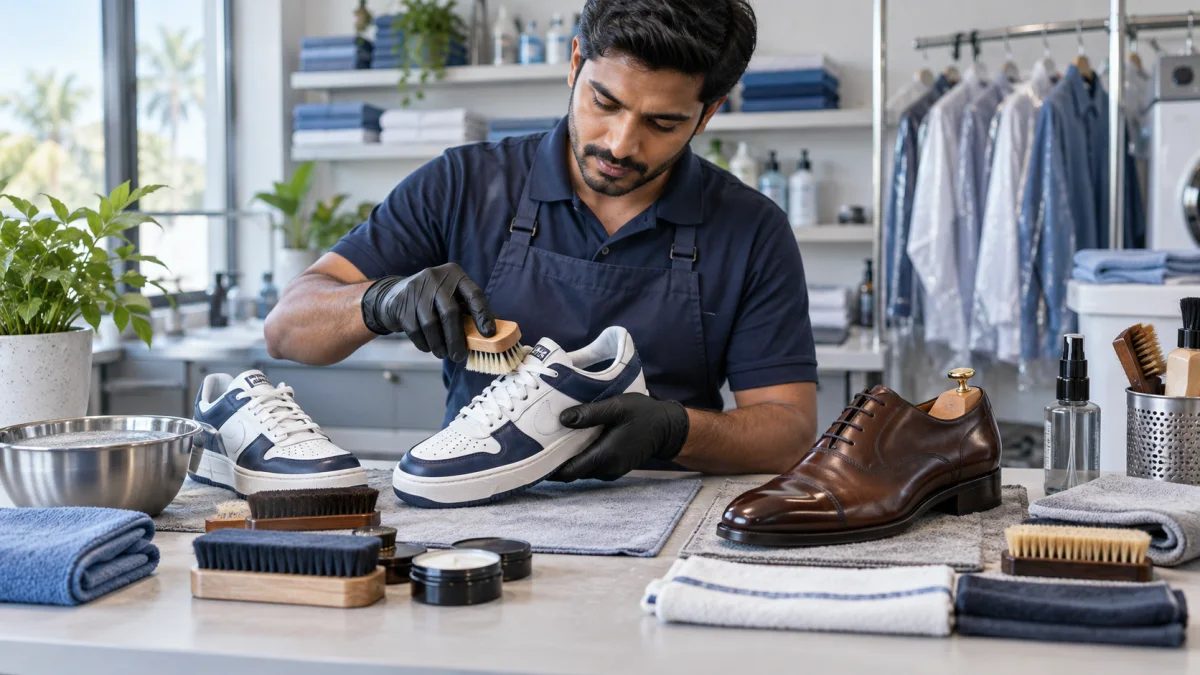
Wash shoes only when the maker permits it and the upper, lining, sole, dye and adhesive can tolerate water. Many fabric sneakers can be cleaned with controlled moisture, but leather, suede, nubuck, decorated footwear and mixed-material pairs usually need a different method.
A washing machine is not the default. Agitation, long soaking, detergent residue and high drying heat can loosen glue, distort shape and move colour even when the textile upper looks washable.
Identify every material in the pair
Read the label or maker's instructions and inspect the upper, tongue, lining, insole, midsole, outsole, stitching and glued joins. Synthetic mesh may sit beside leather trim; a fabric shoe may use colour-sensitive lining. Follow the most delicate component and note any cracking, separated sole or weak stitching before cleaning.
Remove laces and removable insoles only when the design allows. Clean them separately according to their material and keep left and right parts together. The main laundry and cleaning guide explains why mixed materials need separate checks rather than one convenient label.
Prepare dry before adding moisture
Let mud dry, then brush off loose soil with a tool suitable for the surface. Tap soles together outdoors gently, without stressing glued edges. Remove small stones from tread using a blunt safe tool. Starting with dry soil reduces the amount of dirty water pushed through fabric and seams.
Test any cleaner on a hidden area of both colour and material. Do not mix bleach, detergent and household chemicals. White shoes are not automatically bleach-safe, and optical brighteners can leave uneven patches. Protect printed logos, reflective panels and decoration from strong rubbing.
Use controlled cleaning instead of soaking
For label-approved washable fabric, use small amounts of suitable solution and gentle movement. Work in sections so soil is lifted rather than spread. Avoid saturating foam padding and glued joins. Rinse or extract residue carefully because leftover detergent can stiffen fabric and attract more dust.
Leather needs products intended for its finish and controlled conditioning; suede and nubuck require surface-specific tools and minimal moisture. Do not improvise with cooking oil or strong soap. Our shoe and sneaker cleaning service in Karachi assesses each pair's construction before choosing washing, surface cleaning or a limited treatment.
Laces can usually be cleaned more thoroughly when removed, but first photograph an unusual lacing pattern. Do not soak leather or waxed laces with ordinary fabric ones. Insoles may contain foam, leather, printed layers or odour-control material; follow their instructions and avoid wringing. If they are fixed, forcing removal can tear the lining or change the fit.
Odour often comes from retained moisture and repeated wear. Cleaning can remove suitable soil, but fragrance alone does not correct a damp interior. Rotate shoes, use clean socks and let each pair air between uses. If the material has persistent mould-like spotting or the structure remains wet, seek appropriate advice rather than sealing the pair in a box.
Dry slowly while protecting shape
Do not place shoes against a heater, use a hot hair dryer or leave sensitive colour in harsh direct sun. Heat can shrink uppers, warp soles and weaken adhesive. Support the shape with clean, unprinted absorbent material, replacing it as it becomes damp. Leave openings exposed to moving air.
Check the toe, tongue, insole area and seams before wearing or storing. A dry outer surface can hide moisture inside padding. Karachi humidity can extend drying, so allow more time instead of adding heat. Reinsert completely dry insoles and laces only after the interior is ready.
Know what cleaning cannot repair
Cleaning can remove suitable soil but cannot reverse worn tread, cracked leather, permanent dye loss, deep sole yellowing or failed glue. Old staining may have changed the material. A responsible service should point out these limits and avoid treatment that risks the pair merely to chase a perfect appearance.
Before cleaning a valuable pair, note scuffs, sole separation and colour variation on both shoes. One shoe may be more sun-faded or worn than the other, so a perfectly identical finish may not be realistic. Keep the pair together throughout cleaning and drying, but prevent wet colour from one surface touching the other.
Store clean dry shoes with airflow, away from damp walls and crushing weight. Rotate pairs so daily footwear can dry between uses. For thick washable household items with similarly important drying needs, read how to wash blankets and quilts; for fibre-specific floor textiles, see woollen versus synthetic carpet cleaning.
Frequently asked questions
Can all sneakers go in a washing machine?
No. Machine movement and soaking can affect glue, shape, colour, padding and trim. Follow the maker’s instructions for the complete shoe.
Can shoes be dried with a hair dryer?
Avoid high direct heat. It can shrink material, warp soles and weaken adhesive. Use airflow and shape support instead.
Is bleach safe for white shoes?
Not automatically. Bleach can yellow material, weaken fibres and create uneven colour. Test only an approved product for that construction.
Can cleaning repair a separated sole?
No. Cleaning does not repair failed adhesive or damaged structure, and the pair may need repair before moisture-based treatment.
If a pair has mixed materials, stubborn soil or uncertain wash instructions, request an assessment through our shoe and sneaker cleaning service in Karachi. Share any product already used and allow enough time for safe drying.


