
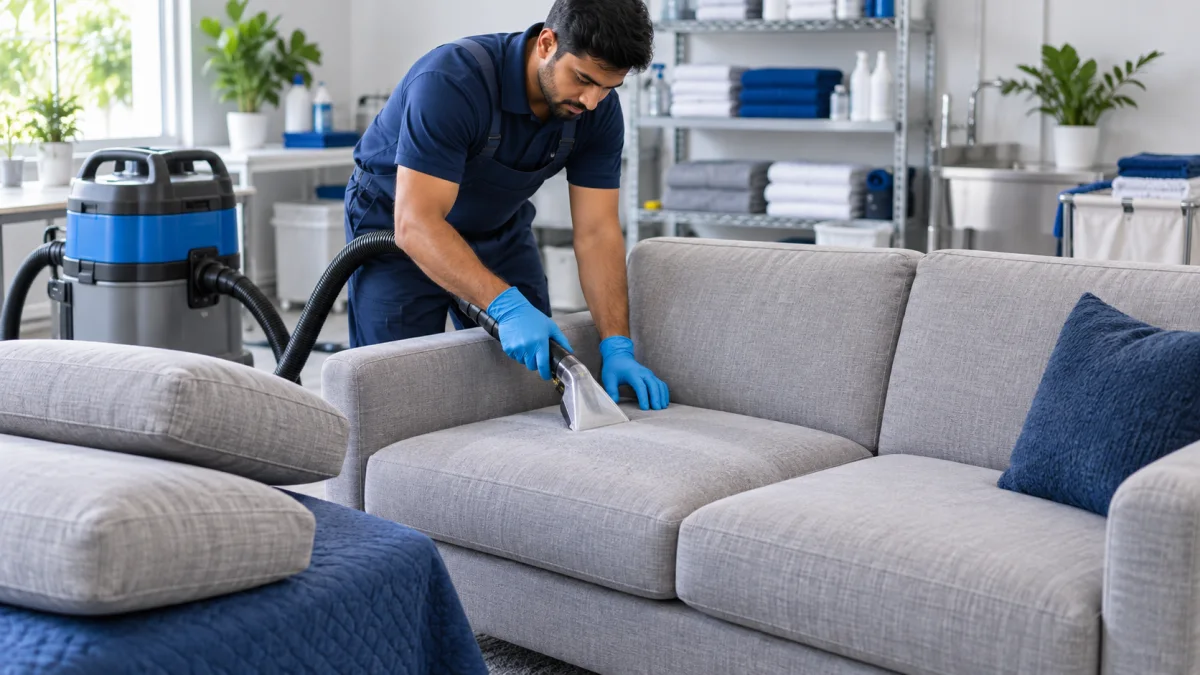
Vacuum a frequently used sofa regularly and arrange deeper cleaning when visible soil, persistent odour, widespread staining or the maker's care schedule indicates it. There is no single safe monthly number for every sofa; fabric, household use, dust, spills, pets and drying conditions change the interval.
Clean promptly enough that soil does not become embedded, but do not repeatedly wet upholstery without need. Condition-based care protects colour, texture, filling and drying time better than a fixed timetable.
Use the care code and construction as your baseline
Look for the maker's label beneath cushions or the frame. Upholstery codes may restrict water or require solvent-based professional treatment. Check whether cushion covers are removable, but do not assume a zip makes them machine washable. Covers can shrink separately and become difficult to refit.
Inspect piping, buttons, backing, loose thread, colour transfer and foam condition. A sofa may combine different face fabric, lining and filling. The general textile-care guide explains label checks, while upholstery adds the problem of fixed padding that cannot be rinsed or dried like clothing.
Routine maintenance reduces deep soil
Vacuum with a clean upholstery attachment, using lower suction where the fabric is loose or delicate. Remove cushions if the design permits and reach crumbs along seams and edges. Rotate reversible cushions to spread wear. Keep the tool free of sharp edges and avoid dragging it over decorative thread.
Deal with a fresh spill by lifting solids and blotting liquid with a clean colourfast cloth. Work from the outside inward and do not scrub. Check the care code before applying any product, then test a hidden area. Too much foam or water can leave rings, sticky residue and slow-drying padding.
Signs that deeper cleaning is due
- Visible darkening on seats, arms or head-contact areas.
- Odour that returns after ventilation and dry vacuuming.
- Several spots or a large area that cannot be treated evenly at home.
- Dust released when cushions are moved despite routine vacuuming.
- Cleaning recommended by the maker after a period of heavy use.
Sunlight can make fading look like soil, and worn fibres cannot be cleaned back into their original texture. A realistic assessment separates removable contamination from permanent wear. Do not keep increasing chemical strength when a mark does not change.
Professional treatment should control moisture
A cleaner should identify the fabric and test colour stability before widespread treatment. The process may include dry soil removal, targeted pre-treatment, controlled agitation and extraction where suitable. Edges and cushions should be treated consistently to avoid obvious variation. Existing damage and stain limits should be discussed first.
Through our sofa cleaning service in Karachi, the team considers fabric, filling, stains and ventilation before choosing a method. Karachi humidity can extend drying, so airflow and realistic return-to-use guidance matter. Sit on the sofa only when covers, seams and padding are completely dry.
Set a schedule around real household use
A lightly used formal sofa needs less frequent deep cleaning than daily family seating. Young children, pets, food, open windows and nearby dust can shorten the interval. Use washable throws only if they are colourfast and do not trap moisture. Clean spills immediately and record any product used so a later professional treatment can account for it.
Review high-contact areas separately. Armrests, headrests and the front edge of seat cushions collect skin oil sooner than the back panel. Clean the complete visual section rather than creating a sharply treated spot beside an untreated area. Where cushions can be rotated, keep their original orientation noted so patterns and nap still align after care.
After any moisture-based treatment, improve airflow around and beneath removable cushions. Do not use a hot hair dryer to force the process, and do not cover the sofa with a sheet while it is damp. Check piping and the gap between cover and filling before normal use. If one area dries much more slowly, tell the cleaner instead of masking the smell.
Keep a simple note of the last deeper clean and any recurring spill location. This helps you notice whether a plumbing leak, damp wall or household habit is causing the same problem again.
Mattresses face longer body contact but different construction; compare home and professional mattress cleaning. Rugs and fitted carpets respond differently again, so read woollen versus synthetic carpet care before transferring a sofa-cleaning product to the floor.
Frequently asked questions
Does every sofa need professional cleaning on the same schedule?
No. Use, fabric, spills, dust, pets and ventilation differ. Inspect the sofa and follow the maker’s guidance rather than relying on one fixed interval.
Can removable cushion covers go in a washing machine?
Only when their label permits it. A zipper alone does not mean a cover is washable, and separate washing can cause shrinkage or colour variation.
How soon can I sit on a sofa after cleaning?
Wait until the fabric, seams and internal padding are fully dry. Humid weather can make this take longer than the surface appearance suggests.
Should I scrub a fresh sofa spill?
No. Lift solids and blot liquid gently after checking the care code. Scrubbing can spread the stain and damage the surface.
When routine vacuuming is no longer enough, arrange an inspection through our professional sofa cleaning service in Karachi. Share the care code, stain source and any product previously used so the team can choose a responsible method.


