
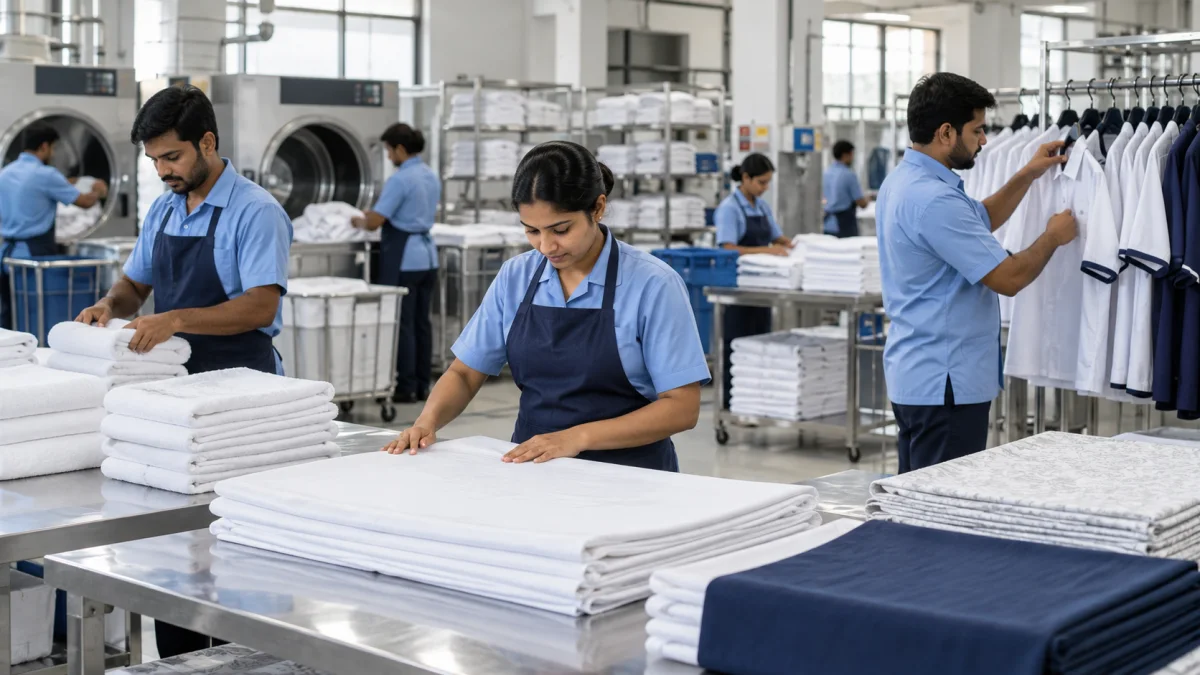
Hotels and restaurants need a repeatable laundry plan: define which uniforms and linens are accepted, separate soil types, record counts, agree turnaround and check every return. The service should match each textile's label and business use rather than forcing kitchen cloths, table linen and staff uniforms through one process.
A written handover routine reduces lost items, mixed colours and unclear stain expectations. Start with an inventory and a small trial batch before setting a regular collection schedule.
Build an inventory by textile and use
List shirts, trousers, aprons, chef coats, tablecloths, napkins, towels and any other accepted item separately. Record colour, fabric, size range and care label. Keep food-service textiles away from maintenance cloths or anything exposed to unsuitable chemicals. Damaged items should be removed for repair rather than entering the normal cycle unnoticed.
Agree how each group will be counted at pickup and return. Bundles should be labelled clearly without pins through fabric. The main laundry and dry-cleaning guide explains care decisions for individual textiles; a business account adds inventory control and repeat scheduling.
Separate stains before they enter the load
Kitchen oil, tea, sauces, cosmetics, ink and ordinary body soil require different attention. Staff should identify fresh spills and avoid applying unknown chemical mixtures. Keep heavily soiled items separate and communicate what caused the mark. Heat should not be applied before a stain is checked.
Set realistic standards for permanent wear. Old oil, dye loss, scorch marks, weakened fibres and repeated abrasion may remain after cleaning. Replacing a worn item can be more responsible than subjecting it to increasingly aggressive treatment. A trial batch reveals how the actual textiles respond.
Agree the service level and turnaround
Define whether each group needs wash and fold, wash and iron, ironing only or dry cleaning. Confirm presentation: folded stacks, hangers, trouser creases and bundle sizes. Build enough spare stock into operations so a safe cleaning delay does not stop service. Express work should be reserved for suitable items rather than becoming the default plan.
Through our commercial laundry service in Karachi, requirements can be discussed around textile type, volume and schedule. Dreams Dry Cleaners operates Monday to Saturday from 8AM to 10PM and Sunday from 10AM to 5PM. Pickup arrangements should be confirmed for the account rather than assumed.
Use clear hygiene and handling controls
Clean and soiled textiles need separate containers and handling paths. Bags and trolleys should be clean, dry and identified. Staff handling soiled items should follow the business's workplace procedures. Laundry chemistry and temperature must remain within textile labels; stronger treatment is not automatically better when it damages cloth or leaves residue.
Drying must be complete before packaging, particularly for thick hems and stacked linen. Warm folded textiles can hold moisture in the centre of a bundle. Allow cooling, keep the storage area dry and rotate stock so older clean items are used first. Do not place returned linen directly against a damp wall.
Collection containers should be sized so textiles are not forced into dense bundles. Agree who seals, labels and counts each batch, and keep clean-return containers away from the soiled holding area. If a bag arrives wet or contains an unexpected sharp object, the issue should be recorded before normal processing.
Volume planning should reflect the busiest operating days, not only an average week. Share expected changes in advance so capacity and turnaround can be confirmed honestly. Maintain enough replacement stock for damaged pieces and delayed specialist treatment. This is more reliable than asking for unsafe speed after every unexpected shortage.
Designate one contact from the business to approve changes and review discrepancies. When several staff members send conflicting instructions, finishing and counts become harder to verify. A consistent contact, written item categories and batch references create a clear trail without adding unnecessary paperwork.
Review the inventory whenever uniforms, suppliers or fabric specifications change. A process approved for the old textile may not suit its new replacement fabric.
Measure quality with a return checklist
- Compare returned counts with the pickup record.
- Inspect agreed stain areas and separate permanent damage from soil.
- Check dryness, odour, folding and requested pressing.
- Record recurring damage by textile type or workplace task.
- Report concerns promptly with the batch reference.
Review the process after the trial and at regular intervals. If the same stain recurs, improve workplace handling instead of relying only on stronger cleaning. For collection preparation, read how laundry pickup and delivery works. The dry-cleaner selection checklist covers pricing, communication and problem handling.
Frequently asked questions
Should uniforms and kitchen linen be washed together?
Not automatically. Sort by textile, colour, care label and soil type, and keep unsuitable maintenance cloths or chemical exposure separate.
Why is a trial batch useful?
It shows how the actual fabric, colour, stains and finishing requirements respond before a regular volume and schedule are agreed.
How should a business track laundry?
Use item categories, counts, pickup and return references, stain notes and a record of damaged pieces removed from circulation.
Can every recurring stain be removed?
No. Heat, age, dye loss, abrasion and fibre damage can make some marks permanent. Prevention and timely reporting are also important.
To discuss repeat loads, textile categories and turnaround, contact our commercial laundry service in Karachi. Start with a clear inventory and trial batch so the process can be agreed before regular collections.


