

Home washing is right for many everyday clothes, while dry cleaning is better for garments whose fabric, construction or care label makes water risky. The safest choice starts with the care label, the type of stain and how the item is made—not simply whether it looks delicate.
This guide explains how our Karachi laundry team makes that decision after 22 years of hands-on garment care. It will help you sort a normal load, avoid common damage, understand when steam finishing is useful and know when a garment should go to a professional instead.
Choose the cleaning method before treating a stain
Begin by checking the garment before adding water, detergent or a stain remover. A washable cotton shirt with ordinary perspiration marks usually belongs in a normal laundry process. A structured suit, embellished formal outfit or item labelled dry clean only needs a different approach. If colour is already bleeding, a coating is peeling or the fabric feels weakened, pause rather than experimenting.
The stain matters as much as the fabric. Water-based marks, body oils, food grease, ink and transferred dye do not respond to one universal treatment. Rubbing can push a mark deeper or disturb the surface. Hot water can set some stains, while chlorine bleach can permanently alter colour and damage fibres. Blot fresh liquid with a clean, colourfast cloth, keep the item away from heat and tell the cleaner what caused the mark if you know.
A practical decision is:
- Wash at home when the label permits it, colours are stable and the item is an uncomplicated everyday fabric.
- Use a professional online laundry service in Karachi when a large load needs sorting, controlled washing, proper drying and finishing.
- Choose dry cleaning when the label requires it or water may affect the garment's shape, finish, lining, colour or decoration.
- Ask before treatment when the label is missing, the stain is unknown or different materials are joined in one garment.

Read the care label and inspect the whole garment
Care symbols cover washing, bleaching, drying, ironing and professional cleaning. A crossed-out wash tub means the garment should not be washed in water. Dots inside an iron indicate the permitted heat level. A crossed-out tumble-dry symbol warns against machine drying. A circle relates to professional textile care; instructions inside or beside it guide the cleaner.
The label is essential, but it is not the only check. Look at buttons, zips, hooks, glued trims, embroidery, lining and shoulder structure. A fabric may tolerate water while an attached trim does not. Dark and bright colours should be checked for transfer, especially on new garments. Empty every pocket and point out loose stitching before cleaning so it is not mistaken for damage caused during the process.
When a label has been cut out, avoid assuming that a soft fabric is automatically hand-washable. Fibre blends can behave differently from their appearance. Test only in a hidden area, use cool water if a cautious test is appropriate, and stop if colour transfers or the texture changes. For a fuller explanation, use our guide to dry-clean-only labels and garment-care symbols.
Formal and traditional clothing deserves extra inspection. Suits, sherwanis, lehengas and wedding dresses can combine outer fabric, lining, interfacing, beads, metallic thread and adhesives. Treating one component safely does not guarantee that the entire garment will respond well. Our detailed guides cover suit and sherwani care and wedding dress and lehenga cleaning.
Build a safer routine for everyday laundry
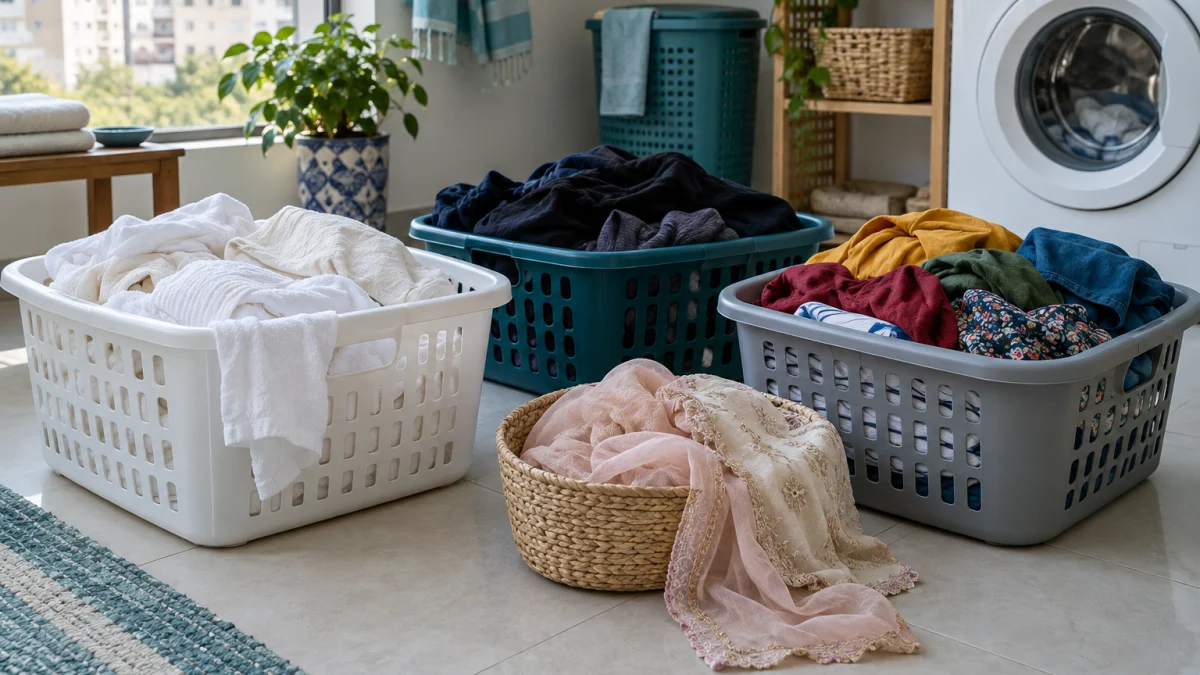
Good laundry results start before the machine runs. Separate whites, dark colours and bright colours. Then separate sturdy items such as towels from lighter shirts and delicate fabrics. Close zips, fasten hooks, turn printed garments inside out and place small delicate items in a mesh bag. Do not pack the drum tightly; clothes need room for water and detergent to move through the load.
Use the label's permitted temperature and measure detergent for the load instead of adding extra “for strength.” Too much detergent can leave residue and make rinsing harder. A gentle cycle is not a substitute for reading the label, and a hot cycle is not automatically more hygienic for every fabric. Dry promptly after washing, but avoid high heat when the label does not allow it. Reshape knits while damp and support their weight rather than stretching them on a hanger.
Check pockets for tissues, pens and sharp objects, then separate heavy, lint-producing towels from smooth dark clothing. If a new coloured item has not been washed before, keep it away from pale garments until you know the dye is stable. Apply only a treatment that suits both the stain and the fabric, and use the smallest practical amount. Give it the recommended contact time, but never let a product dry onto the material unless its directions explicitly permit that.
After the cycle, inspect stained areas before using a dryer or iron. Heat can make a remaining mark more difficult to treat. If the stain is still visible, do not keep repeating stronger home remedies; rinse away any product safely and seek advice. Also stop if the fabric becomes rough, pale or distorted. These changes can indicate fibre or dye damage rather than dirt that needs more scrubbing.
Iron only when the fabric is clean. Heat can set remaining marks. Start at a lower setting, work from the inside where shine is a risk, and use steam only when the label permits it. Do not press directly over prints, beads or delicate decoration. If you are deciding between washing, pressing and professional treatment, compare dry cleaning with home washing, learn how often clothes actually need dry cleaning, and review steam ironing versus regular ironing.
Know when professional cleaning is the safer option
Professional care is not necessary for every garment. It becomes useful when the item is dry-clean-only, heavily structured, difficult to dry safely, unusually large, or affected by a stain that home treatment could set. It also helps when you need consistent finishing across a mixed household load or do not have enough drying space during humid weather.
Before accepting an item, a careful cleaner should inspect the label, fabric, trim, pockets, visible marks and existing wear. The method should follow that inspection. Stain treatment is targeted rather than poured over the whole garment, and pressing is adjusted to the fabric instead of applying one heat setting to everything. Some old stains, damaged fibres, unstable dyes and worn decoration cannot be restored safely; a responsible cleaner explains limitations rather than promising a perfect result.
For blended household needs, our guide to wash and iron versus dry cleaning explains how to divide a load. If your main concern is a specific mark, see how to approach tea, oil and ink stains and sweat marks and yellow collars without making them harder to remove.
Adapt garment care to Karachi weather and daily life
Karachi's heat, humidity, dust and monsoon periods affect how clothes should be stored and dried. Putting slightly damp clothes into a cupboard can lead to a stale smell and encourage spotting. Allow every layer, seam and waistband to dry fully. Keep wardrobes ventilated, avoid crowding garments and use clean, breathable covers for special outfits rather than sealing in moisture.
After wearing a suit or formal outfit, air it in a shaded, ventilated place before storage. Do not leave perspiration or food marks untreated for months between wedding events. Winter blankets and quilts should be completely dry before packing; their thickness can hide retained moisture. The same principle applies to household textiles and upholstered items, but their cleaning methods differ from garment laundry.
Direct summer sun can help some sturdy white items dry, but prolonged exposure may fade coloured fabric and weaken items that the label says should dry in shade. Indoors, leave space between garments and keep air moving; folding them while cool but still damp traps moisture. During monsoon weather, plan enough drying time rather than compensating with excessive heat. When an item develops a persistent damp smell, washing it again without correcting the drying problem may only repeat the result.
Use the focused guides for laundry care during Karachi humidity and monsoon, washing blankets and quilts, home versus professional mattress cleaning, planning sofa cleaning, and woollen versus synthetic carpet care. Footwear needs its own material check too; use the shoe washing and sneaker-care guide before putting any pair in water.
What to expect from pickup to finished clothes
A convenient service still needs a clear handover. Separate any item with a special concern and explain the stain, previous treatment or repair. Confirm whether you want washing, dry cleaning, ironing or a combined service. Check pockets yourself, even though the cleaner should inspect them again. When the order returns, unpack garments that need airflow and store them only when fully dry.
Dreams Dry Cleaners serves customers from PECHS, Karachi. Doorstep pickup has a minimum order of Rs 5,000, with free pickup and delivery for qualifying orders. Smaller orders may be dropped at our PECHS shop. Orders can be arranged by phone, WhatsApp or the online form. Express service is available in 24 to 48 hours, depending on the item and treatment required. Muhammad Khalid leads the business with 22 years of experience, and our team examines garments before choosing a process. If you are not happy with the result, we will re-clean or re-iron the item free of cost.

For a step-by-step view, read how laundry pickup and delivery works. Households can also use our practical checklist for choosing a dry cleaner in Karachi. Businesses handling repeat loads should refer to the guide for uniform and linen laundry.
Related specialist laundry and cleaning guides
This pillar guide gives the decision framework. The articles below explore particular materials and services in more depth:
- How professional steam finishing is used for garments
- How to wash and store blankets and quilts
- Mattress cleaning at home versus professional treatment
- How often sofa upholstery should be cleaned
- Why woollen and synthetic carpets need different care
- Which shoes can be washed and which need specialist care
Frequently asked questions
Is dry cleaning better than washing for every garment?
No. Correctly sorted, label-approved home washing is suitable for many everyday clothes. Dry cleaning is the safer choice when the label, structure, fabric, trim or stain makes water treatment risky.
Should I treat a stain before sending clothes to a cleaner?
Blot fresh liquid gently, but avoid rubbing, heat, bleach or an unknown chemical. Tell the cleaner what caused the stain and anything already applied to it.
How quickly can laundry be completed in Karachi?
Dreams Dry Cleaners offers express service in 24 to 48 hours, subject to the item and required treatment. A delicate or heavily stained garment may need more time for safe care.
Does Dreams Dry Cleaners provide pickup and drop-off?
Yes. Doorstep pickup has a minimum order of Rs 5,000, with free pickup and delivery for qualifying orders. Smaller orders may be dropped at our PECHS shop. Booking can be made by phone, WhatsApp or the online form during business hours.
Need help choosing the right care for your clothes? Arrange online laundry pickup in Karachi with Dreams Dry Cleaners. Our team will inspect the garments, confirm the suitable process and return them after cleaning and finishing.


