
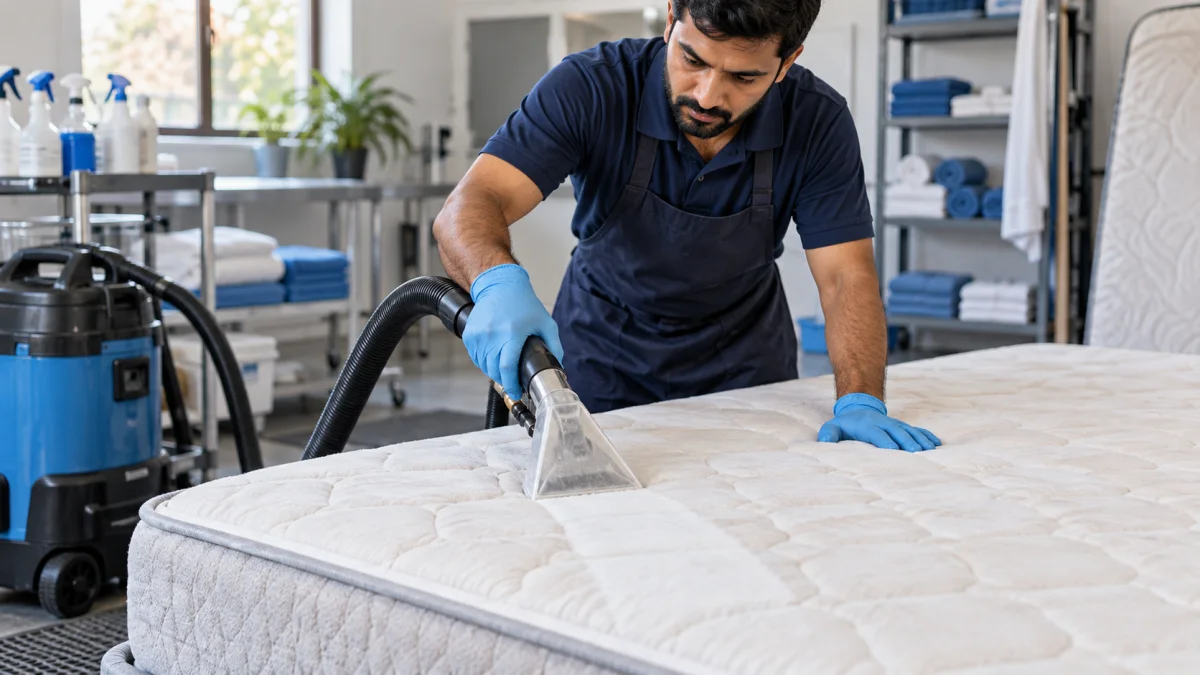
Home care is suitable for routine vacuuming, prompt blotting of small spills and regular airing. Professional cleaning becomes useful when staining, embedded soil, persistent odour or the mattress size makes controlled extraction and complete drying difficult. In both cases, the main rule is to avoid soaking the inner layers.
A mattress is not a washable garment. Foam, padding, adhesive, springs, covers and stitched layers can react differently, and trapped moisture may remain long after the surface feels dry.
Start with the maker's care instructions
Check the mattress label and warranty guidance before applying water, heat or a product. Identify whether the cover is removable and genuinely washable; a zip does not always mean the cover should be taken off. Removing a tight cover can damage foam or make correct refitting difficult.
Inspect the top, sides, piping, handles and underside. Note tears, weak seams, colour transfer and the source of any mark. The main laundry and cleaning guide explains the same label-first principle for textiles, but a mattress needs much stricter moisture control because its interior is thick and slow to dry.
Safe routine care at home
Strip the bed and wash the bedding according to its labels. Vacuum the mattress slowly with a clean upholstery attachment, paying attention to seams where dust collects. Use gentle passes rather than pressing a dirty tool into the fabric. Rotate or turn the mattress only as its maker recommends; many modern designs are not intended to be flipped.
For a fresh spill, remove excess liquid with clean absorbent cloths and blot from the outside toward the centre. Do not scrub or pour cleaner directly into the padding. Use only a label-compatible product in a small amount after a hidden test. Keep the room ventilated and do not remake the bed until the area is dry through the treated depth.
Why home deep-cleaning can go wrong
Using too much water can spread the stain and carry it into lower layers. A powerful household mixture may fade the cover, leave a sticky residue or react with foam and adhesive. Steam can introduce both heat and moisture; it is not automatically safe because the surface fabric tolerates it. Strong fragrance masks odour without removing its source.
Drying is the hardest part in Karachi humidity and monsoon weather. Fans and airflow help, but a surface touch cannot confirm that thick inner material is dry. Do not sleep on, cover or wrap a damp mattress. If moisture came from a large spill, leak or flooding, seek appropriate advice promptly rather than relying on repeated surface treatment.
What professional cleaning should assess
A professional should ask about the stain, age, previous products, fabric and mattress construction. The method may include controlled vacuuming, targeted pre-treatment and moisture-limited extraction where suitable. It should not promise that every old stain or odour will disappear, because dye change, foam damage and contamination below the cover can limit the result.
Our mattress cleaning service in Karachi starts with condition and material checks. Point out repairs, persistent dampness and any product already used. In some cases, replacement or specialist remediation is more responsible than repeated cleaning, particularly when internal material has been extensively wet or damaged.
Prevent soil and moisture between cleanings
Use a breathable washable protector suitable for the mattress, and wash it according to its own label. Change bedding regularly, keep the room ventilated and address plumbing or wall dampness rather than treating the mattress alone. Allow body warmth to disperse before covering the bed with heavy layers after waking.
Keep the bed base clean and make sure ventilation openings are not blocked. When vacuuming, work on a dry surface and clean the attachment before it touches the mattress. Do not rely on baking powder, perfume or a deodorising spray as proof of cleanliness; powders can remain in seams, and fragrance can hide a moisture problem without solving it.
Cleaning is also different from pest control or medical treatment. If you suspect insects, mould growth or a health concern, use an appropriately qualified service rather than asking a general textile cleaner to make an unsupported claim. Describe what you observed and avoid moving contamination through the home.
Blankets and quilts also hold moisture but can have washable construction; see how to wash blankets and quilts safely. Upholstered seating has different use patterns and drying needs, covered in how often to clean a sofa. Treat each item according to its structure rather than applying one household formula everywhere.
Frequently asked questions
Can I soak a mattress to remove a deep stain?
No. Soaking can carry soil deeper and trap moisture inside foam and padding. Use minimal, controlled treatment and allow complete drying.
Does a zipped mattress cover always come off for washing?
No. Some covers are not designed for consumer removal even when they have a zip. Check the maker’s instructions first.
Can steam be used on every mattress?
No. Heat and moisture may affect foam, adhesive, fabric and drying time. The label and construction must support the method.
When can bedding go back on after cleaning?
Only when the treated area and inner layers are fully dry and cool, with no damp feel or odour.
If staining or odour needs more than careful surface care, request an assessment through our professional mattress cleaning service in Karachi. The team will explain the suitable method and drying requirements before treatment.


