
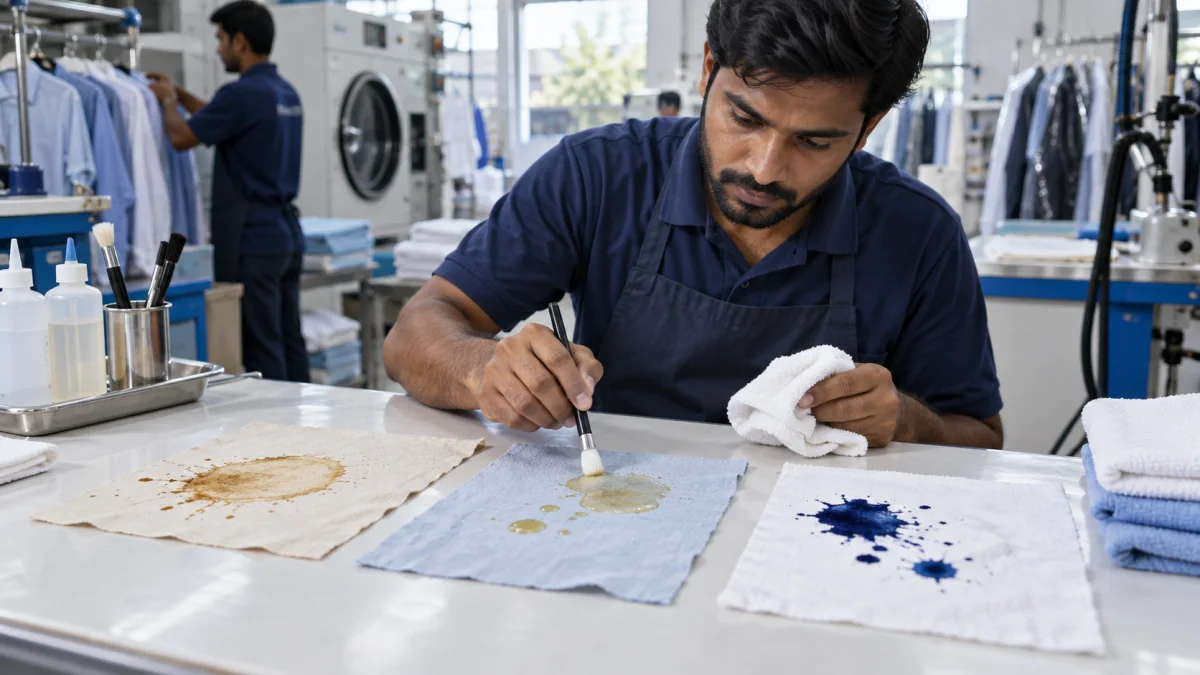
Tea, oil and ink stains need different first steps: blot tea, lift excess oil without spreading it, and contain ink rather than rubbing it through the fabric. For all three, check the care label, keep the item away from heat and avoid mixing household chemicals.
Acting quickly helps, but aggressive treatment can cause permanent colour or fibre damage. If the garment is dry-clean-only, silk, wool, structured or decorated, limit home action to safe blotting and arrange an assessment.
Set up before touching the stain
Place a clean white absorbent cloth beneath the area if the construction permits. Remove solids gently with a blunt edge and work from the outside toward the centre. Check whether the colour transfers to a damp white cloth in a hidden place. Read washing, bleaching, drying and ironing symbols—not just the wash temperature.
Write down what caused the mark and what has already been applied. Do not combine bleach, ammonia, acids, solvents or unknown stain products. Ventilate the area and follow product safety directions. The main garment-care guide explains when a label or mixed construction should stop home treatment.
Tea stains need blotting and label-safe rinsing
Blot fresh tea without scrubbing. If the label permits water, rinse from the reverse with cool or lukewarm water so the liquid moves back out rather than deeper through the face. Treat milk tea as a mixed stain because it also contains fat and protein. Do not begin with hot water, which can make part of the mark harder to remove.
Apply only a stain product approved for the fabric and colour, then wash according to the label. Inspect before machine drying or ironing. If a pale outline remains, repeat only a safe process; do not jump to chlorine bleach on coloured or delicate fabric.
Oil stains need absorption without spreading
Lift excess cooking oil with a clean absorbent material. Do not rub it across a larger area. An appropriate absorbent powder may help on some sturdy washable fabrics, but it must be removed fully and should not be used blindly on textured, dark or delicate items. Avoid heat until the oily appearance is gone.
A label-approved liquid detergent may help a washable everyday garment, followed by the permitted wash. Oil can travel through layers, so check both sides and the lining. On silk, wool, formal wear or an old set mark, professional treatment is safer. Our dry-cleaning service in Karachi assesses the stain and fabric before selecting a treatment.
Ink needs identification and restraint
Ballpoint, gel, marker and printer ink have different formulas. Do not assume one alcohol-based remedy suits them all. Place absorbent white material beneath a washable stable fabric and blot a tested product in small amounts only when its directions and the label permit. Replace the backing as ink transfers so it is not pressed back into the garment.
Never rub in circles or flood the area; both can create a larger halo. Keep ink away from adjacent panels and lining. For a large spill, delicate fabric or unknown ink, stop after containing it. Tell the cleaner the pen or source if known and mention every product used.
After any label-approved wash, examine the stain in daylight while the garment is still away from heat. A wet fabric can hide an oily shadow, and a dark item may conceal ink until it dries. If treatment changed the garment dye, more stain remover will not restore the lost colour. Separate the item from other clothes until you know no dye or ink will transfer.
Work on one chemical step at a time and rinse as directed before considering another. “Natural” ingredients can still alter dye or fibre, and online combinations may release irritating fumes. When the label forbids the product you have, the safe choice is to stop, not to reduce the amount and hope.
Know when to stop and seek help
Stop if dye transfers, the surface becomes rough, a pale patch appears or the stain spreads. A mark that survived heat, long storage or several chemicals may not be safely removable. More force can exchange a stain for permanent fibre damage. Do not hide it with an iron, fragrance or coloured marker.
Perspiration and collar yellowing need a different routine, covered in removing sweat stains and yellow collars. To decide whether an otherwise ordinary item can still be washed, compare dry cleaning and home washing. Always describe the stain honestly at handover so the cleaner can set realistic expectations.
Frequently asked questions
Should tea stains be rinsed with hot water?
Do not start with hot water. Check the label and use cool or lukewarm water when permitted, especially because milk tea includes protein and fat.
Can I iron over a small oil mark?
No. Heat can set remaining oil and make treatment harder. Inspect the garment after cleaning before drying or ironing it.
Does rubbing alcohol remove every ink stain?
No. Ink formulas and fabrics differ, and alcohol can move dye or affect finishes. Test only when the label and product directions support it.
Why must I tell a cleaner about home stain products?
Residue can change the next treatment or react with another product. Accurate information helps the cleaner avoid unsafe combinations.
For tea, oil or ink on a delicate, structured or dry-clean-only garment, arrange an assessment through our Karachi laundry and dry-cleaning service. Early information about the stain and previous treatment helps the team choose a safer approach.


