
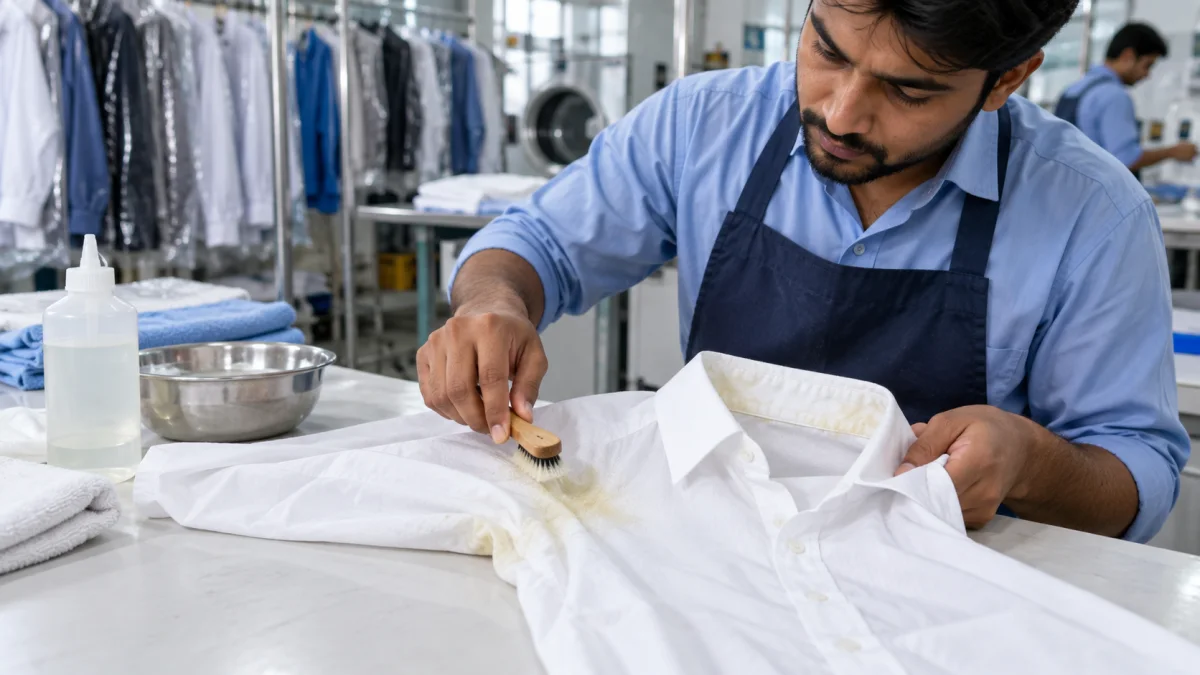
Treat sweat marks and yellow collars before heat: check the label, test colour, apply a fabric-safe treatment, wash as directed and inspect before drying or ironing. Yellowing can come from body oils, perspiration, deodorant, detergent residue or fibre ageing, so one strong remedy is not appropriate for every shirt.
Karachi heat makes prompt care important, but bleach and aggressive scrubbing can weaken collars or remove colour. The aim is to lift residue without replacing a stain with permanent fabric damage.
Identify the fabric and type of buildup
Read the wash, bleach, drying and ironing symbols. White cotton may allow options that a coloured cotton blend, silk shirt or decorated kameez does not. Examine the collar edge, underarms and cuffs for fibre wear, hardened product residue or colour loss. A pale area may be faded dye rather than removable soil.
Check whether the mark feels waxy from deodorant or oily from skin contact. Fresh perspiration may be less visible than older oxidation. The main laundry and dry-cleaning guide explains care-label decisions and why existing damage sets a treatment limit.
Pre-treat washable shirts cautiously
Turn the garment inside out and rinse label-approved fabric with cool or lukewarm water. Apply only a product suitable for the fibre and colour, using its measured amount and contact time. Work gently from the reverse instead of scrubbing the collar face. Test an unseen area first, especially on dark or bright clothing.
Do not mix chlorine bleach with acids, ammonia or another cleaner. White fabric is not automatically chlorine-safe, and repeated bleaching can weaken fibres or create uneven yellowing. “Natural” mixtures can still alter dye. If the label forbids the available product, stop rather than improvising a weaker blend.
Wash, rinse and inspect before heat
Wash at the permitted temperature with enough room for movement and rinsing. Measure detergent for the load; excess can remain in the collar and combine with body oils. Keep pale items away from unstable colours. After the cycle, inspect the area in daylight while the garment is still away from the dryer.
If a shadow remains, repeat only a safe method or seek advice. Do not iron the collar to make it look smoother because heat can set residue. Through our wash-and-iron service in Karachi, washable garments are inspected before finishing so visible marks are not simply pressed into the fabric.
Handle delicate and structured garments differently
Silk, wool, dry-clean-only shirts, lined jackets and embellished clothes should not receive a general collar soak. Moisture can create rings, move dye or affect interfacing. Blot fresh perspiration where safe, air the garment, and explain the location to a cleaner. Avoid perfume, which adds residue without removing body oil.
An old yellow mark may have altered dye or fibre permanently. Professional treatment may improve it without guaranteeing complete removal. Tell the cleaner about deodorant, bleach or stain products already applied. For tea, oil and ink, use the separate stain-response guide because those marks need different first steps.
Reduce recurring collar and underarm marks
Let deodorant and skin products dry before dressing, and use the correct amount. Wash frequently worn shirts before residue builds through repeated use. Rotate work clothes so each item can dry and air fully. During hot weather, an appropriate washable undershirt can reduce direct contact, provided it does not make the wearer uncomfortable.
Do not leave damp worn clothes compressed in a basket. Separate colours and wash according to the label as soon as practical. Clean the washing machine and iron according to their instructions so residue is not transferred back. The comparison of wash and iron versus dry cleaning helps divide washable shirts from pieces that need another method.
Collar care also starts with wearing and storage habits. Avoid leaving a sweaty shirt in a closed car, gym bag or plastic cover. If immediate washing is not possible, let it air separately without spreading moisture to clean clothing. Never store it in the wardrobe merely because the outer surface has dried.
When several shirts show the same grey or yellow band, review detergent amount, rinse quality, deodorant buildup and iron cleanliness before escalating stain chemistry. Hard rubbing at the fold line can fray fabric and make the collar look lighter even after it is clean. Record which method worked safely for that exact fabric instead of transferring it to every garment.
Replace worn shirts when the collar fibres have thinned beyond safe cleaning; stain treatment cannot rebuild missing material.
Frequently asked questions
Should I iron a yellow collar after washing?
Only after the mark is removed and the label permits the heat. Ironing a remaining stain can set residue and make treatment harder.
Is chlorine bleach safe on every white shirt?
No. Fibre blends, finishes and stitching may be damaged, and repeated bleach use can weaken fabric. Check the complete label.
Why do underarm marks return?
Body oils, perspiration, deodorant and detergent residue can build in fibres. Correct pre-treatment, rinsing and prompt washing help reduce recurrence.
Can old yellowing always be removed?
No. Age, heat, dye change and fibre damage may make part of the discolouration permanent. Treatment should stay within the fabric’s safe limit.
For washable shirts with collar or perspiration buildup, arrange free pickup and delivery for doorstep orders of Rs 5,000 or more through our wash-and-iron service in Karachi. Smaller orders may be dropped at our PECHS shop. Point out every affected area and any product already tried before the clothes are cleaned and pressed.


