
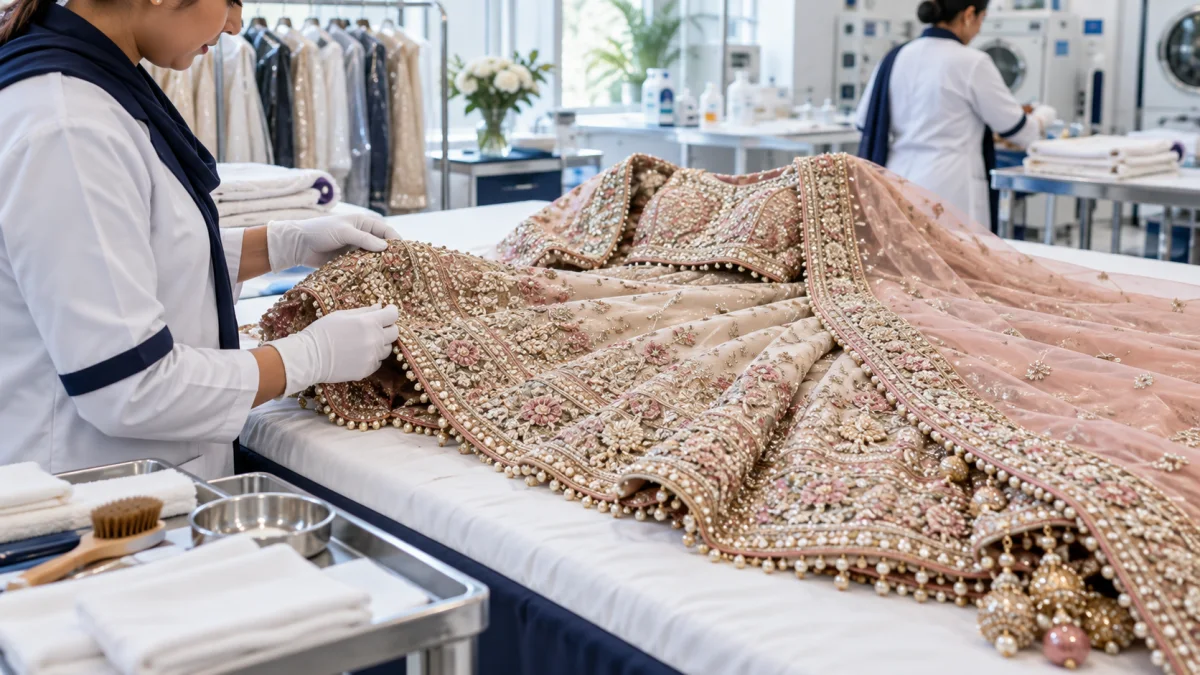
A wedding dress or lehenga should be inspected soon after use, cleaned according to its most sensitive material, and stored only when every layer is dry. Do not wash it simply because the base fabric seems familiar: embroidery, lining, net, padding, metallic thread, stones and adhesive can each react differently.
The safest plan starts before a stain becomes old. Record what spilled, avoid home chemicals and give the cleaner enough time to test and treat cautiously. No responsible process can promise that every old mark will disappear without risk, especially where fabric or decoration is already weak.
Inspect the outfit in sections
Lay the outfit on a clean surface with enough support. Check the neckline, underarms, sleeves, front, waist, hem and train in good light. Examine every layer, including the lining and net beneath embroidery. Look for makeup, perfume, food, oil, mud and colour transfer. Mark locations on a note rather than pinning paper to delicate fabric.
Check hooks, zips, drawstrings, cups, boning, tassels and loose thread. Photograph the arrangement of detachable pieces for your own reference, then keep accessories separate if the designer's instructions allow. The main laundry and dry-cleaning guide explains why the label, stain and construction must be considered together.
Avoid quick stain remedies after the event
Blot fresh liquid gently with a clean white cloth. Do not rub, scrub embroidery or apply bleach. Avoid talcum powder, toothpaste, coloured tissue and mixed household remedies; they can leave residue or spread a mark through several layers. Keep heat away because a hair dryer or iron may set staining and affect glued decoration.
Tell the cleaner what caused the stain and what, if anything, touched it afterward. Clear drink splashes and perspiration may become more visible during storage, so do not ignore them because the outfit looks clean at night. If the care wording is confusing, review dry-clean-only labels and care symbols before attempting any treatment.
Cleaning must respect the most delicate component
A lehenga can combine silk, velvet, net, synthetic lining, metallic thread, beads, sequins and glued stones. A wedding dress may include lace, layered tulle, structured bodice materials and decorative trim. The component least able to tolerate water, movement, heat or cleaning chemistry sets the practical limit for the whole piece.
Professional assessment should include colour stability, trim attachment and existing wear. A small hidden test may be needed, but even testing cannot remove every uncertainty in an aged or altered garment. Through our specialist dry-cleaning service in Karachi, the team discusses visible risks before treatment instead of treating formal wear like a normal load.
Drying and finishing need patient handling
Heavy wet fabric can stretch under its own weight, while trapped moisture can remain between layers. Drying should support the garment and follow its care limits. Direct strong sun may fade colour, and excessive heat can distort net, lining or bonded detail. Every seam, padded area and embellished panel must be dry before packing.
Pressing also needs sections. Never place a hot iron directly on beads, sequins, lace, metallic embroidery or glued stones. Steam may help some fabrics but can affect others, so it should not be used as a universal shortcut. For similarly structured menswear, the suit and sherwani care guide explains lapels, shoulders and formal storage.
Store the cleaned outfit without crushing it
Use acid-free, colourfast tissue only when you know it is suitable, and avoid printed paper. Support heavy pieces horizontally if hanging would pull the waist or shoulders. If a garment hangs, use a broad padded hanger and internal support loops rather than decorative straps. Choose a clean, breathable cover instead of sealing possible moisture inside plastic.
Karachi humidity makes periodic checks important. Store the outfit away from direct sun, damp walls and strong fragrance. Refold a boxed garment occasionally along different lines so one crease does not carry all the pressure. Keep the dupatta and detachable pieces labelled with the outfit, but prevent metal accessories from pressing directly against fabric.
Before the next event, open the cover or box early and inspect the outfit in daylight. This leaves time for gentle professional finishing or a repair instead of emergency heat. Do not spray fragrance onto stored fabric or use steam to hide an odour; first find out whether the garment is damp or unclean. Do not rush this check.
Frequently asked questions
How soon should a wedding outfit be cleaned?
Inspect it as soon as practical after use. Perspiration and clear spills can become harder to address during long storage, even when they are not immediately obvious.
Can a heavily embroidered lehenga be hand washed?
Do not assume so. Water can affect dye, lining, thread, stones and adhesive even when the base fabric seems washable. Follow the complete label and seek an assessment.
Should a wedding dress be stored in plastic?
Long-term sealed plastic can trap moisture. Use a clean breathable method suitable for the fabric, and make sure every layer is completely dry first.
Can every old wedding-dress stain be removed?
No. Stain age, previous treatment, fibre wear and decoration can limit safe removal. A careful cleaner should explain those limits before proceeding.
For a wedding dress or lehenga that needs careful assessment, arrange free pickup and delivery for doorstep orders of Rs 5,000 or more through our Karachi dry-cleaning service. Smaller orders may be dropped at our PECHS shop. Share the fabric details, stain history and any loose decoration so the team can explain the safest available approach.


