
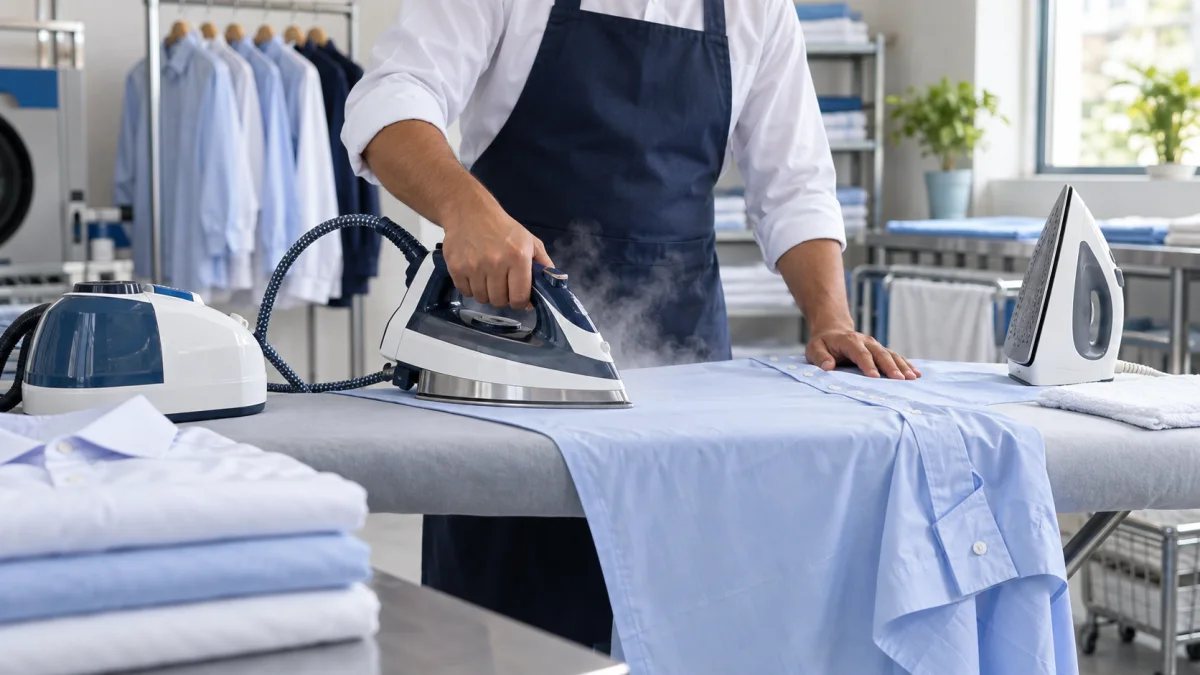
Steam ironing combines heat and moisture to relax many wrinkles, while regular dry ironing relies mainly on controlled heat and pressure. Steam is often quicker for cotton shirts and some trousers, but dry heat gives better control where moisture could mark, shrink or disturb a finish.
The correct choice comes from the care label and fabric, not from how deep a crease looks. Both methods can cause shine, scorching, stretching or trim damage when the temperature is too high or the iron stays in one place.
What steam changes during pressing
Steam carries moisture into fibres and helps them relax before pressure sets a smoother shape. It is useful for many washable cotton and linen garments, and for refreshing ordinary creases after correct cleaning. Steam output should be clean and even; mineral residue or a dirty soleplate can mark pale fabric.
More steam is not always better. Excess moisture can leave water marks, affect fused layers, soften adhesive or distort fabric that must remain dry. Hold vertical steam at a safe distance when the label permits it, and support the garment so its own damp weight does not stretch it. The complete Karachi garment-care guide explains how pressing fits after cleaning and drying.
When regular dry ironing gives more control
Dry ironing is useful when the fabric needs heat without added moisture or when you are setting a sharp crease. Start at a low temperature and increase only within the label limit. Iron the reverse side where surface shine is possible, and place a clean pressing cloth between the iron and sensitive dark fabric.
Dry heat can still damage synthetic fibres, prints, coatings and elastic. Never press over a stain, because heat may set it. Avoid dragging the iron across loose embroidery or buttons. If several items need consistent finishing, the professional steam-ironing service in Karachi can separate garments by fabric and heat requirement.
Match the method to the fabric
Cotton usually tolerates more heat and steam than synthetics, but prints and dark dyes still need care. Linen responds to moisture yet can develop hard creases if it dries folded. Wool benefits from controlled steam and light pressure; direct heavy ironing can flatten its surface or create shine. Silk often requires low heat, a protective cloth and careful moisture control.
Polyester and blended fabrics can look sturdy while melting or glazing under excessive heat. Viscose may change shape when damp, and velvet or raised textures should not be flattened against the board. Decorated formal wear needs section-by-section assessment. For choosing between cleaning and finishing, read wash and iron versus dry cleaning.
Use a safer home-ironing routine
- Read the iron symbol and sort garments from low to higher heat.
- Check that clothes are clean and the soleplate has no residue.
- Test a hidden area when colour, finish or fibre is uncertain.
- Protect prints, dark surfaces, embroidery and delicate trim.
- Let pressed clothes cool and dry before folding or storing.
Do not fill a steam iron with fragrance or an unapproved liquid. Empty and maintain it according to its instructions. Work in good light so early shine or colour change is visible. During humid Karachi weather, allow steamed garments extra airflow; placing them immediately in a cupboard can trap moisture at collars, cuffs and waistbands.
Know when pressing should stop
Stop if the surface becomes shiny, sticky, rough or discoloured, or if decoration begins to move. Do not correct a scorch with stronger steam. Let the item cool and seek advice. A crease caused by damaged fibres, fused interfacing or incorrect drying may not be fixable through repeated ironing.
Professional pressing is useful for structured suits, pleats, difficult collars, layered outfits and mixed household loads. It should still follow the care label and condition of the garment. The focused guide to professional steam finishing in Karachi explains how inspection, controlled moisture and final cooling work together.
The work surface matters too. A stable padded board supports seams without transferring dirt, and a clean iron prevents residue from marking pale garments. Keep the cord and hot soleplate away from hanging fabric. Work from less visible areas toward the front so an unsuitable setting is noticed early. When changing from high-temperature cotton to a synthetic item, allow the iron to cool rather than trusting the dial immediately.
Keep the ironing area clear, well lit and away from children. Rest the iron securely whenever you reposition a garment. If the water tank leaks or spits residue, stop and maintain the appliance before touching clean clothing.
Frequently asked questions
Is steam ironing safe for every fabric?
No. Moisture and heat can mark silk, affect adhesive, distort some fibres or damage trim. Always follow the care label.
Why does dark fabric become shiny after ironing?
Excess heat, pressure or direct surface contact can flatten fibres and create shine. Use lower heat, the reverse side and a clean pressing cloth where suitable.
Can I iron a garment while a stain is visible?
No. Heat can set the stain and make later treatment harder. Clean and inspect the area before pressing.
Should clothes cool after steam ironing?
Yes. Let heat and moisture disperse before folding, wearing or putting the garment into a closed wardrobe.
For neatly finished clothes without guesswork over heat and steam, arrange free pickup and delivery for doorstep orders of Rs 5,000 or more through our steam-ironing service in Karachi. Smaller orders may be dropped at our PECHS shop. If the result is not satisfactory, Dreams Dry Cleaners will re-iron the item free of cost.


